


When moving viscous, abrasive, or shear-sensitive fluids, standard pumping technologies often fall short. You might be managing a process where the consistency of the fluid changes, or perhaps you are dealing with a medium that must be transported without agitation to maintain its internal structure. In these scenarios, the mechanical demands on the equipment are significant, and choosing the right pumping mechanism becomes a defining factor in operational efficiency.
For facilities handling challenging materials, the progressive cavity pump is a frequently selected solution. Unlike pumps that use high-speed impellers to throw fluid outward, this design relies on a different movement pattern. By understanding the mechanical principles behind this equipment, facility managers and engineers can better evaluate if it aligns with their specific fluid-handling requirements.
What Makes Pumping Viscous or High-Temperature Fluids Difficult
Moving fluids that resist flow creates immense stress on mechanical components. In many industrial environments, the material might be thick, laden with solids, or sensitive to temperature fluctuations. When a fluid is particularly viscous, it does not respond well to centrifugal force. Attempting to force such materials through a standard pump can lead to significant energy waste, internal friction, and potential degradation of the product itself.
Furthermore, when dealing with a high temp oil pump application, the challenges multiply. Heat changes the lubricity and density of the oil, requiring components that can withstand thermal expansion without binding or leaking. If the pump is not designed to accommodate these conditions, internal clearances can tighten, leading to accelerated wear on rotors and stators. The goal in these settings is to move the fluid with constant, predictable volume, regardless of changes in temperature or downstream backpressure.
The Mechanism Behind Consistent Fluid Transfer
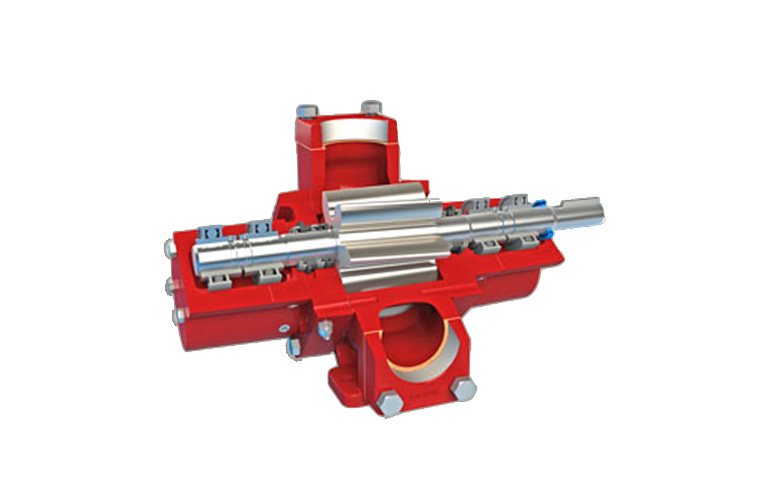
The operational success of this pump type lies in its unique geometry. The assembly typically consists of a metallic rotor—shaped like a precision screw—that rotates inside a flexible, helical stator. As the rotor turns, it creates a series of sealed cavities that carry the fluid from the intake to the discharge.
This process is fundamentally different from conventional pumping. Because the fluid is transported in enclosed pockets rather than being pushed or thrown, the pump generates a continuous, non-pulsating flow. This action is inherently gentle, which is a key advantage when the fluid contains delicate additives or requires shear-sensitive handling. Whether you are moving crude petroleum, industrial lubricants, or heavy slurries, the mechanism ensures that the rate of flow is directly proportional to the rotation speed of the rotor, offering a level of predictability that is highly valued in batching or continuous process control.
Factors That Influence Pumping Performance
Several variables dictate how well a specific system will perform over its service life. The interaction between the rotor and the stator is the most critical consideration. The stator is usually made of a resilient material, and the fit between it and the metal rotor must be tight enough to maintain a seal but loose enough to prevent friction heat.
When selecting equipment for a high temp oil pump environment, the compatibility of the stator material with the specific oil is essential. Certain synthetic rubbers or elastomers perform better under constant thermal stress, while others may lose their elasticity, leading to “slip” where fluid bypasses the internal seals. Additionally, the size of the pump and the speed at which it operates are determined by the fluid’s viscosity. Using an undersized pump for a highly viscous fluid can lead to excessive torque demands on the motor, while running the pump too quickly may lead to cavitation if the fluid cannot fill the cavities fast enough.
Practical Approaches for Maintaining Operational Reliability
To keep these systems running effectively, proactive attention to the internal components is necessary. A common and useful practice is to monitor the motor’s power consumption during operation. If the power draw begins to rise over time, it may indicate that the stator is swelling or that the fluid properties have changed, creating higher resistance within the pumping chambers.
For those overseeing industrial installations, consider these general steps to ensure long-term functionality:
- Review compatibility profiles: Always cross-reference the fluid’s chemical and temperature profile with the manufacturer’s suggested material list for seals and stators.
- Implement consistent monitoring: Pay attention to vibrations and noise levels, as these are often the first indicators that the rotor-stator fit has been compromised.
- Evaluate the intake conditions: A progressive cavity pump typically works best when it has a consistent, flooded intake. Ensuring that the supply line is sized appropriately to prevent suction-side restrictions is a standard way to avoid long-term stress.
- Consult on maintenance schedules: Ask your technical representatives about typical replacement intervals for wear parts based on your specific duty cycle. Developing a preventative parts-replacement strategy based on hours of operation rather than waiting for a failure is generally more cost-effective.
When evaluating a new installation or addressing recurring issues in an existing system, focus on the relationship between the fluid characteristics and the pump’s internal geometry. By understanding the mechanical limitations and the operational requirements of the system, it is possible to achieve stable performance even in demanding environments. Take the time to audit your current fluid-handling setups to determine if the existing equipment aligns with the material’s physical properties and the desired output requirements.