

In a time of growing environmental awareness, one of the most essential resources for life on Earth is often overlooked—soil. Frequently dismissed as just “dirt,” soil is actually a dynamic, living system that plays a critical role in sustaining biodiversity, influencing climate patterns, and securing our food supply. And yet, this vital resource is deteriorating at an alarming pace.
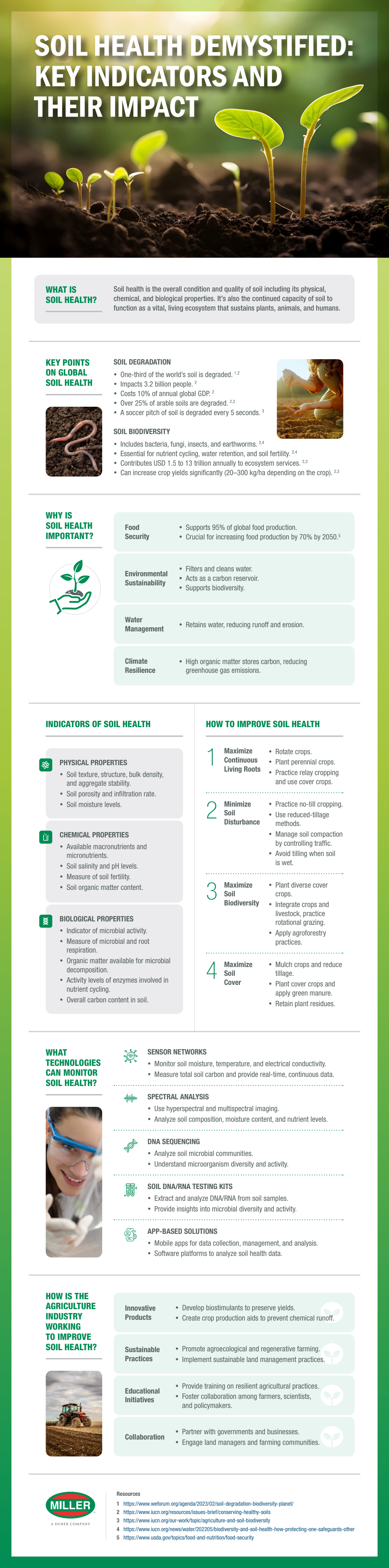
Today, about one-third of the world’s soil is already degraded, threatening the well-being of more than 3 billion people and costing the global economy roughly 10% of its annual output. This crisis isn’t limited to far-flung agricultural regions—it’s unfolding everywhere: in fields, forests, and urban landscapes. Without intentional action, the problem will only deepen, putting food security, climate goals, and ecosystem health at risk.
What Soil Health Really Means
Soil health refers to the ability of soil to operate as a living ecosystem—supporting plants, animals, and humans alike. This concept goes beyond its appearance or texture; it’s about biological activity, structural integrity, and chemical balance working in harmony.
A healthy soil environment teems with life—bacteria, fungi, insects, and organic matter—all of which contribute to nutrient cycling, moisture retention, and erosion prevention. These natural functions are essential for growing crops, storing carbon, filtering water, and sustaining long-term agricultural productivity.
The High Cost of Neglecting Soil
When soil health declines, the consequences ripple far beyond the ground itself. Erosion and runoff increase, leading to sedimentation in waterways and nutrient loss. Soils lose their ability to absorb and hold water, making droughts more severe and floods more destructive. Their capacity to store carbon weakens, contributing to rising greenhouse gas levels.
Moreover, degraded soil reduces crop yields, intensifies food insecurity, and can eventually render once-fertile land unfit for farming. In some cases, the degradation is so severe it forces communities to abandon their land—disrupting livelihoods and contributing to regional instability.
Biodiversity also suffers. Every five seconds, an area of soil equivalent to a soccer field becomes degraded somewhere in the world. This rapid pace endangers species, weakens ecosystems, and undermines conservation efforts.
Tracking Soil Health: What Matters
Measuring soil health involves assessing a combination of physical, chemical, and biological indicators:
- Physical characteristicssuch as texture, compaction, and water infiltration determine how well roots grow and how efficiently the soil holds moisture.
- Chemical properties, including nutrient content, salinity, and pH, affect fertility and plant compatibility.
- Biological activity, such as microbial diversity and enzyme levels, reflects the soil’s capacity to regenerate and support plant life.
These indicators help farmers, land managers, and policymakers make informed decisions about land use and conservation.
Solutions That Regenerate the Soil
Despite the scale of the challenge, soil degradation is not irreversible. A range of proven practices can restore soil health and support more sustainable agriculture:
- Reduce tillageto maintain soil structure and protect microbial ecosystems.
- Grow cover crops and perennialsto promote continuous root presence and reduce erosion.
- Encourage biodiversitythrough crop rotation, managed grazing, and agroecological approaches.
- Maintain surface coverusing organic mulches, crop residues, or living plants to protect the soil from the elements.
These techniques not only rebuild soil health but also enhance climate resilience, reduce input costs, and improve yields.
The Role of Innovation in Soil Stewardship
Modern technologies are helping accelerate soil recovery. From in-field sensors and remote monitoring to DNA-based soil testing and mobile decision tools, farmers and agronomists now have unprecedented access to real-time data. These tools allow for more precise, adaptive management of soil resources—making it easier to balance productivity with sustainability.
The Groundwork for a Resilient Tomorrow
Healthy soil is the bedrock of sustainable agriculture, climate stability, and ecosystem vitality. As we look toward the future, protecting and restoring this foundational resource must remain a global priority. Through smarter farming practices, investment in regenerative solutions like agriculture fertilizer products, and ongoing innovation in monitoring and soil-enriching products, we can ensure that the earth beneath us remains fertile, vibrant, and capable of supporting life for generations to come.
Because true sustainability doesn’t begin in the skies—it begins in the soil.