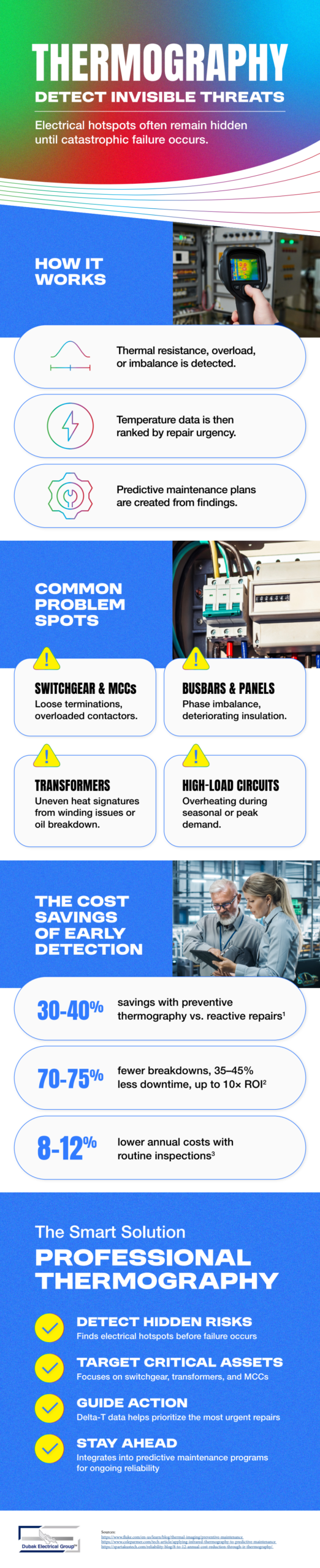


In industrial environments, electrical issues rarely begin with obvious warning signs. More often, they develop quietly through conditions like loose connections, uneven loads, or gradual insulation breakdown. Thermography provides a way to identify these hidden risks early, before they escalate into serious failures.
Using infrared imaging, thermography reveals temperature variations across electrical components. Surfaces that appear normal to the eye can show areas of elevated heat under thermal inspection. These hot spots often indicate resistance, wear, or excessive demand. When used consistently, thermographic scanning becomes an ongoing diagnostic tool rather than a one-time inspection.
The value of thermography extends beyond identifying problems. Skilled technicians interpret thermal data, measure temperature differences, and determine which components require attention. Over time, repeated scans help establish patterns, making it easier to detect gradual changes that signal developing issues. When this information is integrated into maintenance systems, it supports a shift from reactive repairs to planned, preventive strategies.
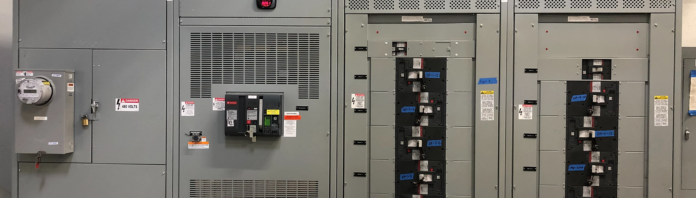
Thermography is particularly useful in monitoring critical infrastructure. Equipment such as switchgear, distribution panels, motor control centers, transformers, and high-load circuits are under constant stress. Identifying early signs of imbalance or deterioration in these systems helps prevent failures that could disrupt operations on a larger scale.
Safety is another important advantage. Electrical faults can lead to fires that are difficult to control and highly damaging. Detecting excessive heat before it reaches a critical point reduces this risk. Regular inspections also support compliance by providing documentation that systems are being monitored and maintained according to established standards.
From a cost perspective, thermography is a practical investment. The expense of routine inspections is relatively low compared to the potential costs of unexpected equipment failure, downtime, or repairs. In many cases, the ability to prevent a single incident can offset the cost of an entire inspection program.
To get the most from thermography, it is important to work with qualified professionals who understand both the technology and the systems being evaluated. Accurate interpretation, clear reporting, and integration into a broader maintenance plan are what turn thermal imaging into a reliable tool for long term performance.
Electrical systems are central to any operation, supporting everything from production to safety. Thermography offers a way to monitor those systems more effectively, uncover hidden issues, and make informed decisions before problems develop into disruptions.
For a deeper dive into thermography and how it exposes hidden risks, check the companion material from industrial power contractors, Dubak Electrical Group.