


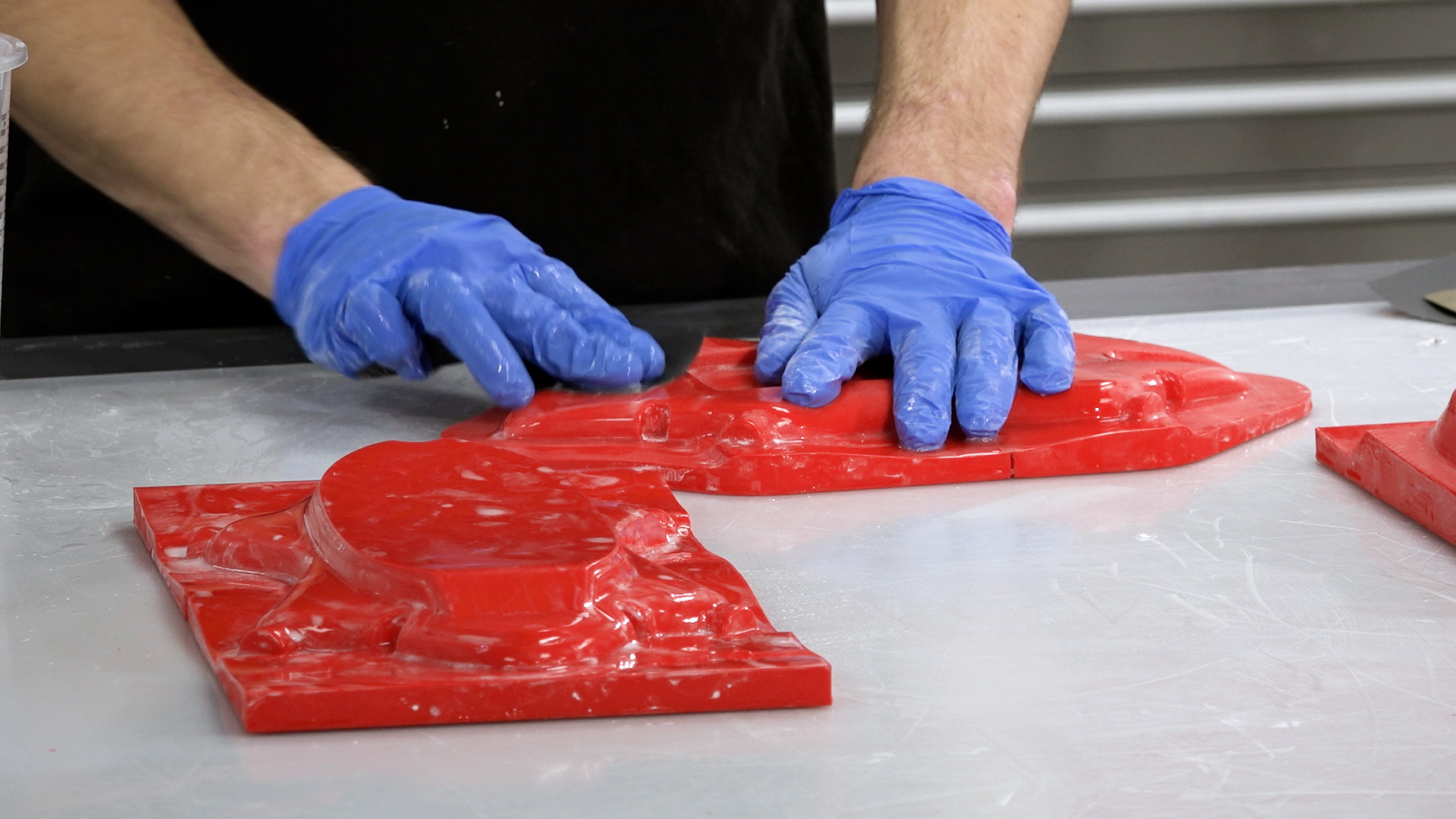
Every composite car part begins life in a mould. Long before a spoiler is fitted or a bonnet is polished, someone has to make the shape that the fibres will follow, and that shape decides how well the finished part fits, how smooth its surface is and how strong it will be. Mould-making is a craft in its own right, and understanding it helps owners judge the quality of the parts they buy.
This article explains how moulds for composite car parts are made, what materials they use, and why a good mould is worth far more than the sum of its parts. It is written for enthusiasts and buyers rather than engineers, so it focuses on the practical points that matter when you are choosing a part.
Why the Mould Matters So Much
A composite part can only ever be as good as the mould it was made in. If the mould surface is rough, the part will be rough; if the mould is slightly the wrong shape, the part will not fit the car properly. That is why experienced makers spend so much time and care on their moulds, and why a cheap part often traces back to a cheap mould. When you look at a finished part, you are really looking at the quality of the mould that produced it.
Moulds also decide how many parts can be made. A well-built mould can produce dozens or even hundreds of identical parts, which is what makes small-batch production possible for specialist car parts. A poor mould, on the other hand, may wear out quickly, lose its shape or release parts badly, and each of those problems shows up in the finished product.
Starting With a Pattern
The first step is usually a pattern, which is a full-size model of the part to be made. The pattern can be shaped by hand from clay, foam or wood, or it can be machined from a digital design using computer-controlled equipment. Either way, the pattern must match the intended part exactly, including the panel gaps and mounting points on the car, because every error at this stage is copied into every part that follows.
Once the pattern is shaped, it is finished to a high standard. The surface is sanded smooth, sealed and polished, since any scratch or roughness on the pattern will appear on the mould and then on every part made from it. This stage is slow and painstaking, but it is where the quality of the final part is really decided. A maker who rushes the pattern will spend far more time later fixing problems in the parts.
Building the Mould Itself
With the pattern ready, the mould is built over it. A release agent is applied first so the mould can be separated from the pattern afterwards. Then layers of composite material are laid over the pattern, usually fibreglass or carbon, and cured until they are rigid. The mould is then removed from the pattern, and its inner surface is inspected, polished and prepared for use. A good overview of carbon fiber molds explains the craft behind the process in more detail.
The choice of mould material depends on how many parts are needed and how much heat and pressure the moulding process will involve. For low-volume work, a composite mould is often enough. For higher volumes or for parts cured at high temperature, a metal mould may be used instead, because it holds its shape better over many cycles. Each option has its own cost and lifespan, and the maker chooses based on the production run.
Using the Mould to Make Parts
Making a part in the mould follows a familiar sequence. The mould surface is cleaned and treated with a release agent, then layers of fibre cloth are laid in, followed by resin. The layers are carefully positioned so the fibres run in the directions that give the part its strength, and any core material or reinforcement is added at this stage. The part is then cured, either at room temperature or in an oven, depending on the resin system.
Once cured, the part is removed from the mould and inspected. Edges are trimmed, mounting points are checked and the surface is finished. A good mould releases cleanly, which keeps the surface smooth and reduces the finishing work needed. If parts keep sticking or coming out with defects, the mould itself is usually the cause, and it may need repair or replacement.
Mould Care and Lifespan
The Tools and Materials Behind the Work
Mould-making uses a range of specialist materials, from pattern-making compounds and release agents to the fibres and resins that form the mould itself. The workshop needs good ventilation, careful temperature control and a clean environment, because dust or moisture can spoil a mould surface. None of this is glamorous work, but it is the foundation of every composite part on the market, and makers who invest in it produce noticeably better parts.
Frequently Asked Questions
Why do some composite parts fit badly?
Poor fit usually traces back to the mould or the pattern it was made from. If the pattern did not match the car exactly, or the mould has warped or worn, every part made from it will carry the same error.
How long does a mould last?
It depends on the material and how it is used. A well-made composite mould can produce many dozens of parts, while a metal mould can last far longer.
What should I ask a supplier about their moulds?
Ask whether the part was made from a mould taken from a real car or from a copy, how many parts the mould has produced, and how they check fit and finish. A maker who answers these questions openly is usually one who takes quality seriously.
Conclusion
Moulds are the hidden heroes of composite car parts. A careful pattern, a well-built mould and proper care between uses are what turn raw fibre and resin into a part that fits, looks good and lasts. The next time you admire a composite spoiler or bonnet, remember that its quality was decided long before the fibres were laid in, in the workshop where the mould was made. The craft behind them rewards anyone who takes the time to understand it.